Deadline27m ago
 Shared by @crypto.at.thenote.app ↗
 newsbtc.com46m ago
 Shared by @circleboom.com ↗
 circleboom.com58m ago
NVIDIA has introduced Halos, a new safety system designed to ensure robots and autonomous vehicles can operate safely near people. The company describes it as the industry's first full-stack, comprehensive safety system for robotics and physical AI, according to fascinating.news. Physical AI refers to machines that can sense, decide, and act in the real world. "the industry's first full-stack, comprehensive safety system for robotics and physical AI" The system integrates AI compute, safety software, sensor data, safety applications, and inspection capabilities to provide a common safety architecture for robots operating near humans, fascinating.news reported. Hacker News added that Halos is also designed for autonomous vehicles, covering the entire development lifecycle from design-time through deployment-time and validation-time. According to Hacker News, Halos provides comprehensive safety guardrails across the development lifecycle to ensure safe AV development and deployment from cloud to car. The platform integrates vehicle architecture, AI models, chips, software, tools, and services into a unified safety framework. NVIDIA's move addresses a growing need as humanoid robots and autonomous vehicles increasingly share spaces with people. By offering a standardized safety architecture, the company aims to reduce fragmentation in how different manufacturers approach safety in physical AI systems.

Companies that have heavily adopted generative AI tools are facing a growing "workslop" problem, where over-reliance on AI leads to organizational knowledge decay. According to Harvard Business Review, this dependence on AI erodes critical business insights and strategic decision
 futurism.com·Tech by Flipboard·58m ago·4 min read
John O'Shanahan of LeanBPI, ahead of his keynote at the Dargan Forum in Dun Laoghaire (June 24-25), argues that sustainability doesn't have to be costly for small and medium enterprises (SMEs). He urges Irish businesses to link digital tools with efficiency and growth to become m
 thinkbusiness.ie·Business by Flipboard·1h ago·5 min read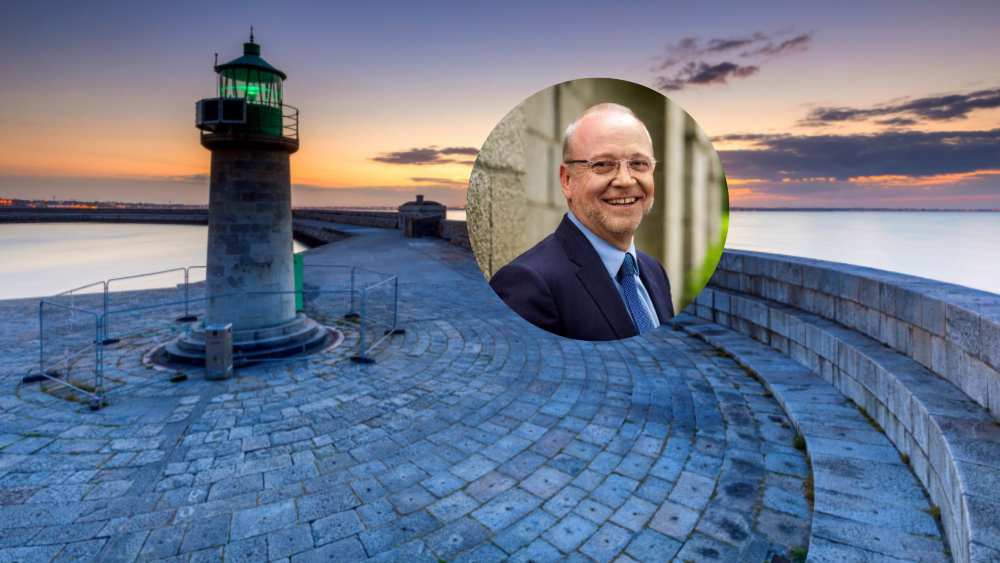

 Shared by @kenbazinet.bsky.social ↗
 npr.org1h ago
 Shared by @aggyrat.bsky.social ↗
 Shared by @yugabytedb.bsky.social ↗
 yugabyte.com1h ago
 Shared by @trishcarey.bsky.social ↗
 seroundtable.com1h ago
The author announces a family pledge of an additional $400,000 to the Zig Software Foundation (ZSF), bringing total pledged support to $700,000 after an initial 2024 donation. The author praises Zig as a technical project and community, highlighting steady progress on the language and compiler, as well as the project's approach to maintainership and communit
 mitchellh.com1h ago
 medium.com1h ago
 Shared by @meghanbartels.bsky.social ↗
 scientificamerican.com1h ago
 Variety1h ago